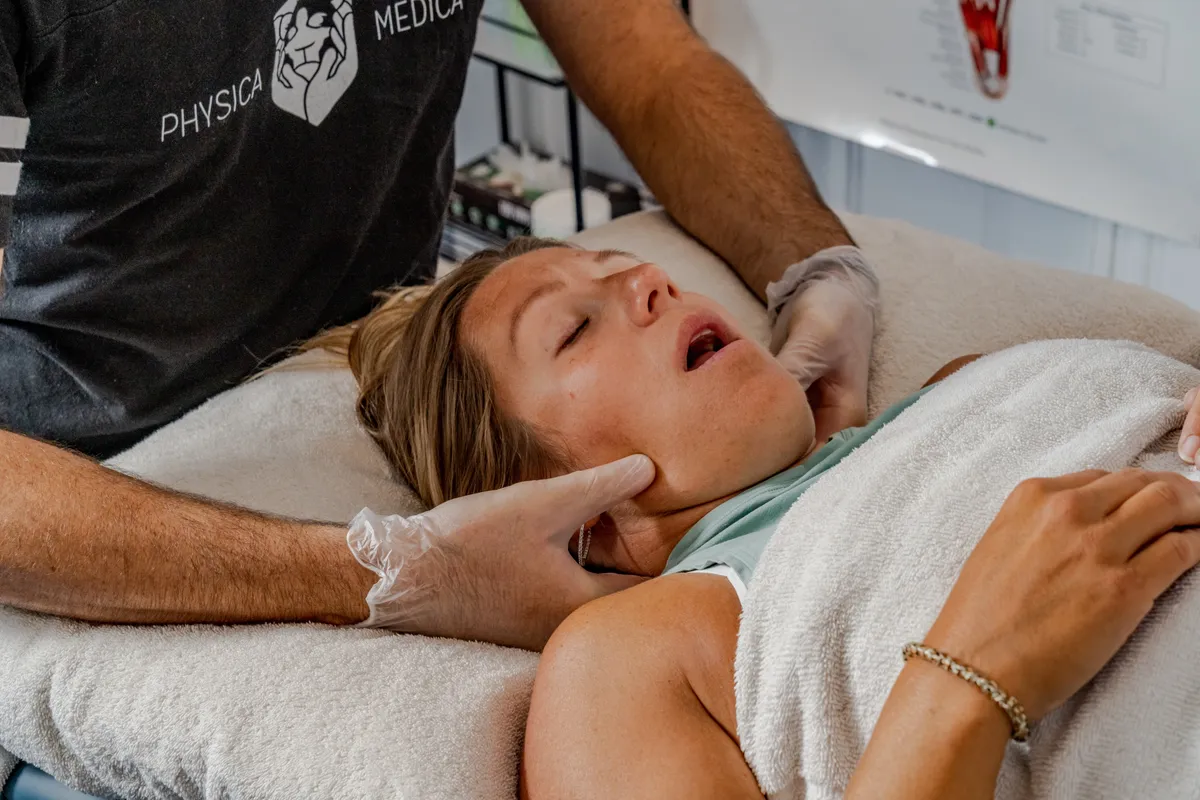
The ApproachThe Jaw-Facial-Neck Connection Most Practitioners Miss
The jaw doesn't operate in isolation. The masseter and temporalis muscles, the primary chewing muscles, are in constant communication with the muscles of the neck, the suboccipital muscles at the base of the skull, and the hyoid muscles that sit just below the chin. Tension in any one of these structures feeds directly into the others.
There is also a less-discussed connection that matters enormously for singers, speakers, and anyone who carries chronic stress in their face: jaw tension drives tongue tension, and tongue tension restricts the movement of the hyoid, which directly limits diaphragm function. This is not a fringe theory. It is anatomy. And it is the reason so many singers with vocal fatigue, restricted range, or chronic throat tension have a jaw problem they didn't know about.
Most practitioners treat the symptom. Dr. Birikov finds the source. For TMJ patients, that means assessing the full jaw-facial-neck chain, including the intraoral muscles that standard physical therapy never touches.