Muscle Tension, Spasms & Trigger Point Treatment in Baltimore | Physica Medica | Physica Medica
Skip to content
Physica Medica logo
Physica Medica logo Consult
Physica Medica logo
Request a Consultation
Back Pain · Baltimore

The knot that won't release. The tension that comes back the next day.

Muscle tension and trigger points are among the most undertreated sources of chronic pain — not because they're hard to find, but because most treatment never actually reaches them. Dr. Birikov works these out directly, with hands and tools, in full-hour one-on-one sessions.

Dr. Maks Birikov, DPT — the first practitioner in Baltimore to hold a master-level dry needling credential.

Request a Consultation

Physica Medica. 800 S Bond St, Fells Point, Baltimore.

Why It Returns

What Are Trigger Points and Why Do They Cause Pain?

A trigger point is a hyperirritable knot within a muscle — a tight band of tissue that has lost its ability to fully contract and release. It stays partially contracted, starved of blood flow, and sensitive to pressure. That much most people know.

What most people don't know is that trigger points cause referred pain. A knot in the upper trapezius can produce headaches at the base of the skull. A trigger point in the hip can send pain down the leg in a pattern that looks exactly like sciatica. The site of pain and the source of pain are often not the same place. This is why treatment aimed only at where it hurts so frequently fails.

Trigger points don't announce themselves clearly on imaging. They don't show up on an MRI. They require a clinician who knows how to find them by feel — and who has the tools to release them once found.

The Approach

Why Muscle Tension Doesn't Resolve on Its Own

Muscle tension persists because the underlying tissue has changed. Chronic contraction leads to fascial adhesion — the connective tissue surrounding the muscle thickens and binds, restricting movement and trapping the trigger point in place. Stretching doesn't break adhesion. Heat provides temporary relief but doesn't change the tissue. Foam rolling works at the surface but rarely reaches the depth where the problem lives.

The nervous system is also involved. A trigger point maintains a feedback loop with the central nervous system — the muscle stays guarded, the brain registers threat, and the cycle continues. That loop has to be interrupted, not just stretched around.

Then it is manual work: release, mobilization, needling, instrument work, for a full hour, by the doctor, every visit.

The Toolkit

How Dr. Birikov Releases Muscle Tension and Trigger Points

The assessment doesn't start at the knot. It starts with the whole pattern — how the body is loading, where the fascial restrictions are pulling from, and which muscle groups are compensating for which. A trigger point in the shoulder often has a driver in the thoracic spine or the hip. Treating only the local site is why the tension comes back.

One-on-One Manual Therapy

Direct hands-on pressure into the restricted tissue, combined with fascial release along the full chain. Dr. Birikov locates the trigger point, applies sustained pressure to interrupt the contraction cycle, and works the surrounding fascia to restore glide between layers. The whole session is with him — no aides, no handoffs.

Learn more →

IASTM (Instrument-Assisted Soft Tissue Mobilization)

Stainless steel instruments are used to detect and break down fascial adhesion. The edge of the tool transmits feedback about tissue texture that hands alone can't always read — and concentrates mechanical force precisely where the restriction is. Commonly called scraping. It creates controlled microtrauma in the adhesed tissue, which triggers a healing response and restores mobility.

Learn more →

Dry Needling

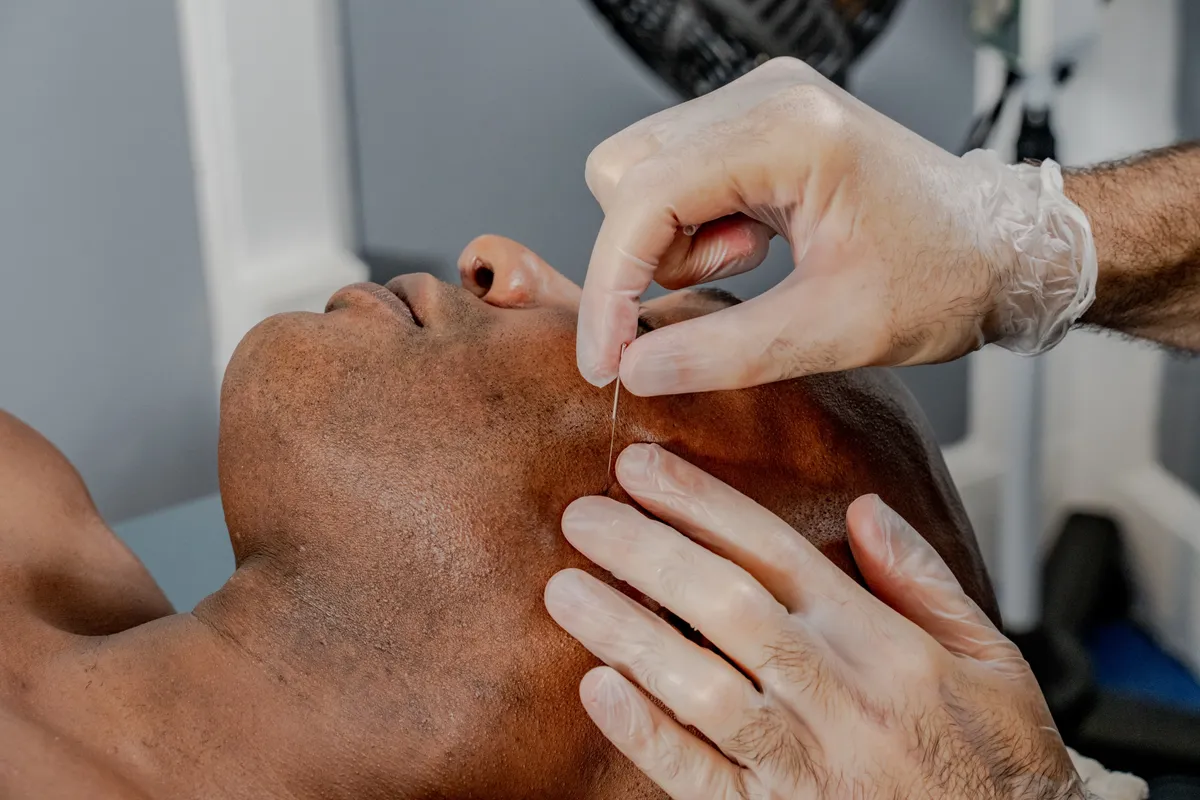
A thin filament needle is inserted directly into the trigger point, producing a local twitch response — an involuntary contraction that resets the muscle's ability to fully release. This reaches depths that manual pressure cannot. Dr. Birikov holds a master-level dry needling credential and is the first practitioner in Baltimore to have done so. Dry needling is legal for licensed physical therapists in Maryland. It is not acupuncture — it targets muscle physiology, not meridian pathways.

Learn more →

Myofascial Cupping

Suction cups are applied to create negative pressure, which lifts the fascia away from the tissue layers beneath it. Where compression-based techniques push down into restriction, cupping decompresses — pulling the layers apart and restoring the glide that chronic tension has eliminated. Cupping can leave temporary marks on the skin. These fade within a few days and are a normal response to the increased circulation in the treated area.

Learn more →

Trigger Point Dry Needling for Deep Musculature

For trigger points in deep spinal or rotator cuff musculature — areas that hands and instruments can't fully reach — dry needling is often the most direct route. The needle accesses the tissue precisely, without the surrounding structures having to be compressed to get there.

Learn more →

Posture Re-Education

Once the restriction is gone, the loading pattern is retrained so the correction survives your working week.

Learn more →
Documented

Treatments for Muscle Tension and Trigger Points at Physica Medica

Each modality below is chosen for what it does to the tissue — not because it's on a menu.

Chronic lumbar pain · seven sessions

Before
After

Anterior hip and thoracolumbar fascia released, then the rib cage taught to rotate again. Pelvic tilt reduced and the lumbar curve settled into a shape the patient could hold without cueing.

Honest Qualification

Shoulder Tension, Muscle Knots, and Related Conditions

This is for you if

  • Your back pain is chronic or keeps returning after treatment that helped briefly.
  • You have already done conventional PT, chiropractic or massage without lasting change.
  • You want hands-on manual therapy rather than a supervised exercise circuit.
  • You are prepared to pay out of pocket for full-hour sessions with the doctor.

This is not for you if

  • You have an acute traumatic injury that needs imaging or surgical evaluation first.
  • You have red-flag symptoms such as progressive weakness or bowel and bladder changes, which need medical assessment now.
  • You are looking for insurance-billed visits three times a week.
  • You want one session to undo a decade-old pattern.
The Hour Itself

Get Relief From Muscle Tension in Baltimore

A full hour, one-on-one with Dr. Birikov. The first portion of each session is assessment — not a form, but hands-on evaluation of how the tissue is responding and what has changed since the last visit. Then direct work on the restriction.

Deep work on trigger points can be intense in the moment. Post-treatment soreness is common and typically resolves within 24 to 48 hours. Cupping may leave visible marks that fade within a few days. These are expected responses — not signs that something went wrong.

Most patients with muscle tension and trigger points feel meaningful change within 4 to 6 sessions. Long-standing, widespread tension takes longer. Dr. Birikov will give you an honest read at intake on what your pattern suggests.

Good Questions

Frequently Asked Questions

How is hands-on physical therapy different from exercise-based PT for back pain?

What is the difference between dry needling and massage for trigger points? Massage applies pressure from the outside and works best on superficial tissue. Dry needling inserts a needle directly into the trigger point and produces a local twitch response that resets the muscle from within. For deep trigger points — in the rotator cuff, deep spinal muscles, or hip — needling reaches tissue that manual pressure simply cannot.

How many sessions will I need for back pain treatment?

How long does it take to release a trigger point? A single trigger point can respond in one session. The more relevant question is how many trigger points are present, how long they've been there, and what fascial restrictions are maintaining them. Isolated, recent trigger points often resolve in 2 to 4 sessions. Chronic, widespread patterns take longer. You'll get a realistic estimate after the first session.

Can you treat back pain that hasn’t responded to other therapies?

Can trigger points cause referred pain in other parts of the body? Yes — and this is one of the most commonly missed explanations for pain that doesn't respond to treatment. A trigger point in the upper trapezius can cause headaches. A trigger point in the piriformis or gluteus minimus can send pain down the leg in a pattern identical to sciatica. Treatment that addresses only the site of pain, without identifying where the trigger point actually is, will keep producing temporary results.

The Next Step

Still in Pain After Trying Everything Else

If you've already been to PT, tried massage, or had chiropractic care and the tension keeps returning — that pattern is worth describing in detail. Where the tension is, how long it's been there, what has helped briefly and what hasn't. Dr. Birikov reviews every inquiry personally and responds directly.

No referral required. Contact Physica Medica at 443-228-8029 or through the contact form. 800 S Bond St, Baltimore, MD 21231.

Preview Give Feedback