
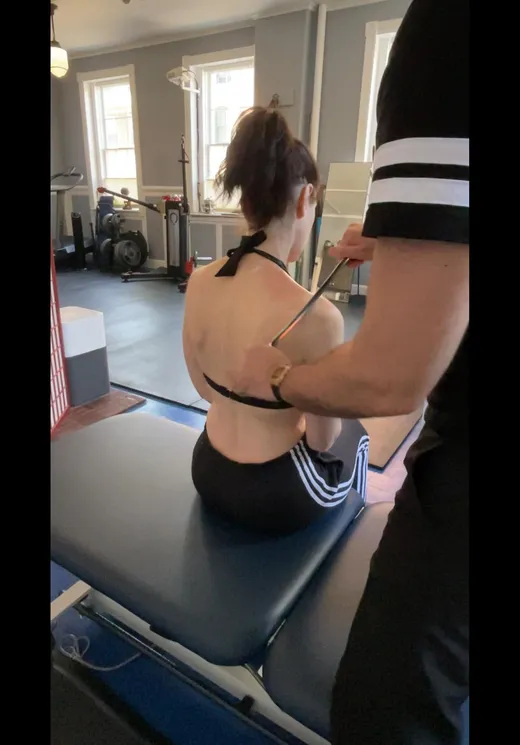
Scoliosis Correction in Baltimore
Dr. Maks Birikov, DPT uses hands-on manual therapy and European fascial techniques to address the structural and soft-tissue patterns that drive scoliotic curves. This is not an exercise program. It is direct, skilled bodywork applied to the spine, ribs, and surrounding fascia. The kind of work most patients with scoliosis have never received.
If you have been told your curve is permanent, that bracing is your only option short of surgery, or that you simply have to manage the pain, there is still a lot you don't know about your condition. That is exactly why you haven't gotten better yet.
Out-of-network by design. HSA and FSA accepted.
A Scoliosis Correction Approach You Won't Find at a Standard PT Clinic
Most scoliosis patients who come to Physica Medica have already been through the standard sequence: a diagnosis, a brace recommendation, maybe a referral to PT for core strengthening, and then nothing. The curve didn't change. The pain didn't go away. They were told to accept it.
That experience is common. It is also the result of a fundamental mismatch between what scoliosis actually is and what most clinics are equipped to do about it. Scoliosis is not just a bony deviation on an X-ray. It is a three-dimensional pattern held in place by tight fascia, restricted joints, and compensatory tension that has built up over years. Telling someone to strengthen their core does not release that pattern.
Dr. Birikov works directly on the tissue. He uses European fascial rehabilitation techniques, manual joint mobilization, and instrument-assisted soft tissue work to address the structural restrictions that maintain the curve. No other practitioner in Baltimore performs this work at this level. That is not a marketing claim. It is the practical reason why patients travel from outside the region to be seen here.
How Dr. Birikov Approaches Scoliosis: What Makes This Different
A scoliotic spine is held in its position by the connective tissue surrounding it. Fascia, the dense, web-like tissue that wraps every muscle, bone, and organ, can become shortened and rigid over time, locking the spine into its compensated shape. Until that fascial restriction is addressed manually, the curve has nowhere to go.
This is for you if
- You want hands-on bodywork: fascia, joint, nerve, needle. Not a program of exercises.
- You have already tried PT, massage or chiropractic and are still in pain.
- Your problem is chronic, recurring, or has never been explained to your satisfaction.
- You would rather have one hour with the doctor than three appointments with three people.
- You are willing to pay out of pocket for undivided expert attention.
This is not for you if
- You are looking for an exercise-based rehab program supervised by an aide.
- You need a clinic that bills your insurance directly and books you three times a week.
- You have an acute traumatic injury that needs imaging or surgical evaluation first.
- You want a single visit that makes a decade-old pattern disappear.
Who Is a Candidate for the Scoliosis Correction Program
This program is appropriate for both adolescents and adults. Age matters less than the degree of fascial restriction and how the body has adapted to the curve over time.
This program may be right for you if:
A shoulder that will not lift past ninety degrees, treated at the shoulder for months. The ribs underneath it had stopped moving, so the scapula had nowhere to travel. Free the rib cage and the shoulder is not the problem anymore.
This program is not appropriate if:
Deep hip pain, clean imaging, no explanation. An old abdominal incision had bound the fascia above it, and every stride was pulling against that anchor. Mobilize the scar and the stride returns.
What the Program Involves
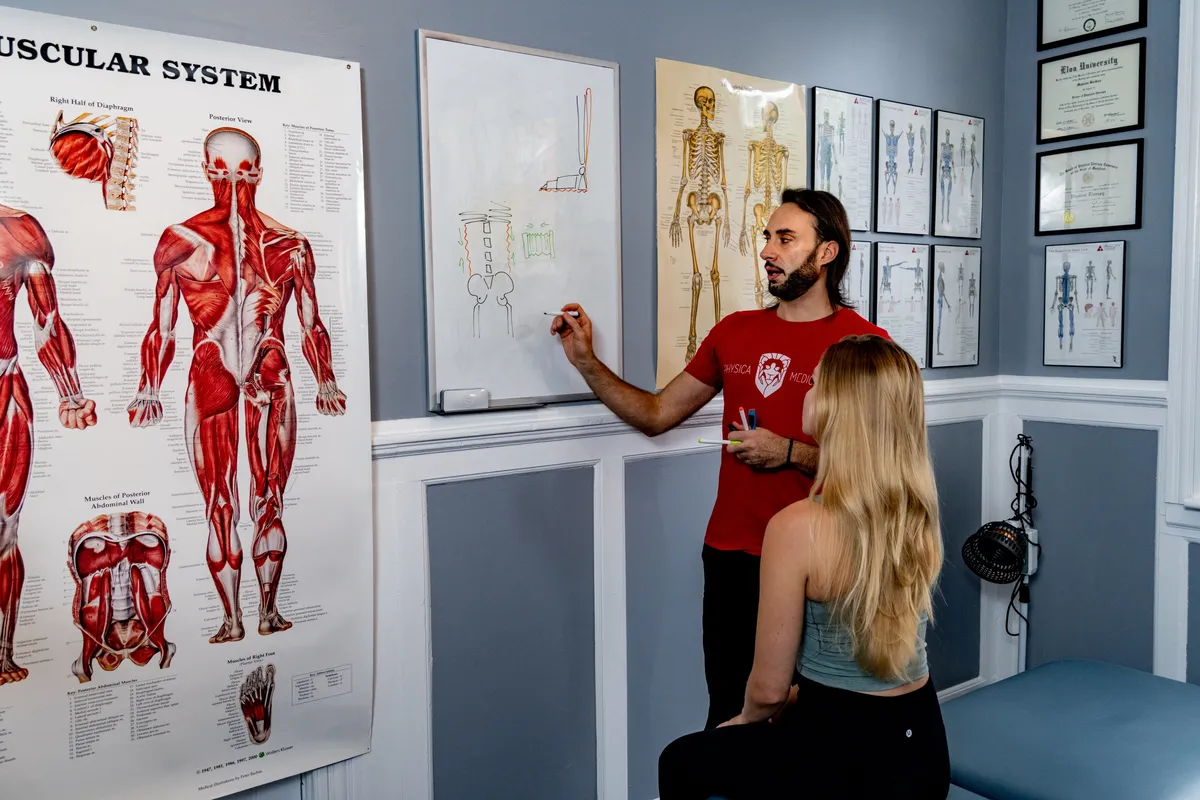
Every patient begins with a full assessment. Dr. Birikov evaluates your posture, movement patterns, breathing mechanics, and the specific tissue restrictions along your spine and rib cage before any treatment begins. The intake is thorough because scoliosis presents differently in every patient. The curve location, the rotational component, the fascial patterns, and the pain picture are all individual.
Results: What Patients Experience
History, briefly
Outcomes in scoliosis treatment depend on the severity of the curve, how long it has been present, and how much fascial restriction has accumulated. Absolute claims are not appropriate here. Anyone making them should be questioned.
Assessment by hand
What the hands-on approach can produce is measurable reduction in the soft-tissue tension that maintains the curve, improved rib cage mobility and breathing mechanics, reduction in the chronic pain patterns that accompany scoliosis, and in many cases, visible postural change. Patients frequently report that their spine feels less locked, that they stand differently, and that pain they had attributed to scoliosis diminishes significantly.
Treatment, same visit
This is correction and management, not a cure. The goal is to change what the tissue is doing, reduce what the curve is doing to your daily function, and give you a body that is not fighting itself. For many patients who have been told nothing can be done, that is a meaningful shift.
An honest arc
Before you leave, an estimate of how many sessions this will take and what will change first. Most patients feel meaningful change within four to six.
Deep manual work can be intense while it is happening and can leave a day or two of soreness, the kind that follows hard exercise rather than injury. Cupping can leave circular marks that fade within a week. Dr. Birikov talks through pressure as he works and adjusts on request. Nobody is asked to endure anything silently.
Start Your Scoliosis Evaluation in Baltimore
How is one-on-one physical therapy different from PT at a regular clinic?
If you are in Baltimore or the surrounding area and you have scoliosis that has not responded to conventional treatment, Physica Medica is the appropriate next step. Dr. Birikov is the only practitioner in Baltimore performing this level of hands-on fascial work for scoliosis correction. No referral is required to book.
How many sessions will I need?
Send a message describing your curve, your history, what you have already tried, and what has not been explained to your satisfaction. Dr. Birikov reads every inquiry personally and responds directly. From there, he will let you know whether this program is appropriate for your specific situation before you commit to anything.
Do you take insurance for one-on-one physical therapy?
No. Physica Medica is out-of-network by design. Reimbursement rules dictate session length and staffing, which is precisely what makes this format impossible inside them. Sessions are paid out of pocket; HSA and FSA funds are accepted and a superbill is provided for out-of-network claims. Rates are quoted plainly before you book.
Frequently Asked Questions
Can scoliosis actually be corrected without surgery or a brace? For mild to moderate curves, hands-on manual therapy that addresses the fascial restrictions holding the spine in its compensated position can produce real structural and symptomatic change. The degree of correction depends on the severity of the curve and how long it has been present. This approach does not replace surgery when surgery is genuinely indicated. But for the majority of patients who have been told bracing or surgery are their only options, that framing leaves significant treatment territory unexplored.
Is this program appropriate for adults, or only adolescents? Both. Adolescents are often seen during a period when the curve is still developing, which creates a particular window for intervention. Adults with long-standing scoliosis carry decades of fascial adaptation and compensatory tension. That tissue can still be changed with skilled manual work. The program is adapted to the individual regardless of age.