Scar Tissue & Post-Surgical Rehab in Baltimore | Physica Medica | Physica Medica
Skip to content
Physica Medica logo
Physica Medica logo Consult
Physica Medica logo
Request a Consultation
Back Pain · Baltimore

The Surgery Worked. So Why Does It Still Hurt?

Scar tissue doesn't stay where the incision was. It spreads through the surrounding fascia, creating restrictions that cause pain and limit movement months — sometimes years — after surgery. If you've been cleared by your surgeon but still feel tight, stiff, or stuck, that's usually why.

Dr. Maks Birikov, DPT — the first certified master dry needling practitioner in Baltimore.

Request a Consultation

Full-hour, one-on-one sessions in Fells Point at 800 S Bond St.

Why It Returns

Why Scar Tissue Causes Pain and Restricted Movement

When tissue is cut or traumatized, the body repairs it fast and without much precision. The collagen fibers that form scar tissue lay down in random, disorganized patterns rather than the aligned structure of healthy tissue. That matters because fascia — the connective tissue web that runs throughout your entire body — doesn't heal in isolation. A scar at your hip can pull on tissue at your lower back. An abdominal incision can restrict your diaphragm. The restriction spreads far beyond the surgical site.

This is why so many post-surgical patients feel fine for a few months and then start noticing stiffness, aching, or movement that just doesn't feel right. The incision looks healed. The surgeon says everything went well. But the fascial network around the surgery has been quietly tightening, and that tightness is now loading joints and muscles in ways they weren't designed to handle.

Standard post-surgical rehab rarely addresses this directly. Exercises can build strength around a restriction, but they can't release it. That's the gap most patients fall into — and it's why pain persists long after the expected recovery window has closed.

The Approach

Post-Surgical Rehab — What Standard Recovery Misses

Most post-surgical physical therapy follows a protocol: protect the site, restore range of motion, build strength. That approach has its place, especially in the early weeks. But protocols are built around the average patient and the average surgery. They are not built around what your specific tissue is doing six months after your specific procedure.

What gets missed is the manual work. Scar tissue mobilization — actually getting hands on the restriction and breaking down the adhesions that have formed in the fascia — requires skilled, direct contact with the tissue. It cannot be replicated with a home exercise program. No amount of stretching reorganizes disorganized collagen. The tissue has to be worked directly.

Patients who've already completed standard PT and still have pain, stiffness, or restricted movement are often exactly the right candidates for this kind of work. Prior treatment failure isn't a reason to give up. It's usually a signal that the restriction hasn't been addressed yet.

The Toolkit

How Dr. Birikov Treats Scar Tissue and Post-Surgical Restrictions

Every session begins with an assessment of how the restriction is actually affecting your movement — not just at the surgical site, but along the full kinetic chain. Scar tissue rarely causes problems only where it forms. Dr. Birikov traces the restriction to where it's loading other structures, then works directly on the tissue.

One-on-One Manual Therapy

The work is manual and specific. Sessions run a full hour, one-on-one. Most sessions draw on two or three techniques depending on what the tissue needs that day. Treatment adapts as the tissue changes — what's appropriate in the first few sessions is often different from what's needed later.

Learn more →

IASTM

Most patients with post-surgical restrictions see meaningful improvement within 6 to 10 sessions, depending on the age of the scar, the type of surgery, and how much secondary restriction has developed in the surrounding tissue. Older, more established scar tissue takes longer to respond than recent adhesions — which is one reason early intervention tends to produce faster results.

Learn more →

Dry Needling

A fine filament needle reaches a trigger point in deep spinal musculature and lets it release. Dr. Birikov is Baltimore’s first master dry needler, and the technique is within the licensed scope of physical therapy practice in Maryland.

Learn more →

Myofascial Cupping

Negative pressure lifts the fascia away from the layers beneath it, restoring glide and blood flow. The circular marks are normal and fade within a week.

Learn more →

Neural Tension Release

For back pain with radiating symptoms, the nerve is freed where it is actually bound, not where the numbness is felt.

Learn more →

Posture Re-Education

Once the restriction is gone, the loading pattern is retrained so the correction survives your working week.

Learn more →
Documented

Treatments for Scar Tissue at Physica Medica

Selected based on what the tissue is doing, not a fixed protocol.

Scar Tissue Mobilization

Before
After

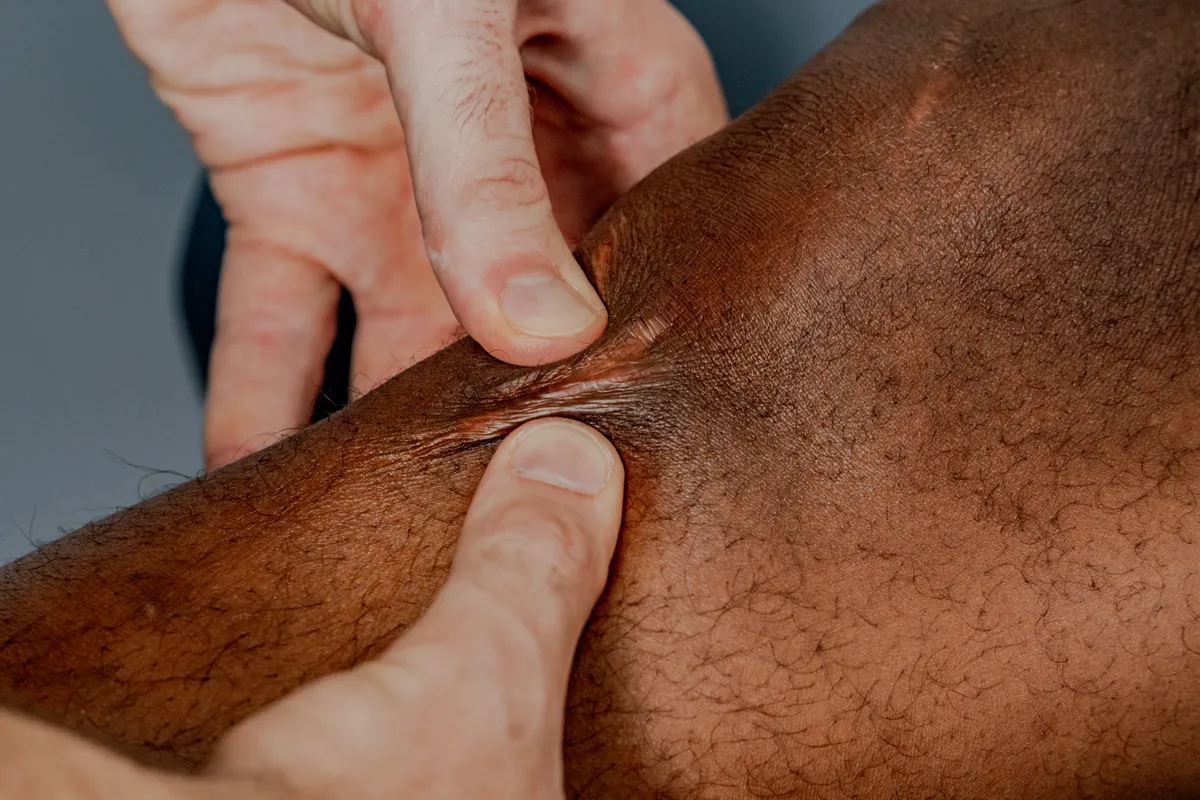
Direct, hands-on work at and around the scar. Dr. Birikov uses manual pressure and movement to break down adhesions in the fascia and encourage the collagen to remodel along more functional lines. This is the core of post-surgical treatment and cannot be replicated with exercises or stretching alone.

Honest Qualification

When to Start Post-Surgical Physical Therapy

This is for you if

  • Your back pain is chronic or keeps returning after treatment that helped briefly.
  • You have already done conventional PT, chiropractic or massage without lasting change.
  • You want hands-on manual therapy rather than a supervised exercise circuit.
  • You are prepared to pay out of pocket for full-hour sessions with the doctor.

This is not for you if

  • You have an acute traumatic injury that needs imaging or surgical evaluation first.
  • You have red-flag symptoms such as progressive weakness or bowel and bladder changes, which need medical assessment now.
  • You are looking for insurance-billed visits three times a week.
  • You want one session to undo a decade-old pattern.
The Hour Itself

Schedule Post-Surgical Rehab in Baltimore

Physica Medica is located at 800 S Bond St in Fells Point. Sessions are one hour, one-on-one with Dr. Birikov. This is an out-of-pocket practice — no insurance billing, no rotating staff, no shared treatment space. The cost reflects a full hour of direct, skilled manual work rather than a supervised exercise session.

To book, describe your surgery, when it was, and what you're currently experiencing. Dr. Birikov reads every message personally and responds directly. You won't be routed through a front desk or asked to fill out a form before anyone looks at what you've written.

Call 443-228-8029 or send a message through the contact page.

Good Questions

Frequently Asked Questions

How is hands-on physical therapy different from exercise-based PT for back pain?

Can scar tissue be broken down with physical therapy?
Yes — but only with the right kind. Scar tissue responds to direct manual work: hands-on mobilization, instrument-assisted techniques, and dry needling. Standard exercise-based PT doesn't address scar tissue directly and is unlikely to produce lasting change in a fascial restriction. The distinction matters, and it's the reason many post-surgical patients plateau in conventional rehab.

How many sessions will I need for back pain treatment?

How soon after surgery can I start physical therapy?
For manual scar work specifically, the incision needs to be fully closed — typically 6 to 8 weeks post-surgery, though this varies by procedure. General movement and mobility work can often begin earlier. The earlier you start addressing the surrounding tissue, the less time the scar has to mature into a rigid restriction. If you're within the first few months of surgery, reaching out now rather than waiting is the better move.

Can you treat back pain that hasn’t responded to other therapies?

What is scar tissue mobilization and how does it work?
Scar tissue mobilization is a hands-on technique in which a trained therapist applies direct pressure and movement to the scar and the surrounding fascia. The goal is to break down adhesions — places where tissue layers have stuck together — and encourage the collagen fibers to remodel in a more organized, functional pattern. It can be combined with IASTM tools for deeper fascial work and dry needling for trigger points that have formed around the restriction. The work is specific, requires clinical skill, and is different in both technique and outcome from general massage.

The Next Step

Take the First Step Toward Real Relief

Describe the pain, how long it has been there, and what has already failed. Dr. Birikov reviews every inquiry personally and will tell you plainly whether he can help.

Dr. Birikov reads every inquiry personally and responds directly.

Preview Give Feedback