
Neural Tension Release Therapy in Baltimore
Dr. Maks Birikov, DPT · Manual nerve mobilization · Sciatica, radiating pain, numbness, and tingling that hasn't resolved with standard treatment
A full hour of hands-on work with the doctor. No aides, no handoffs. Neural tension release is performed alongside fascial and joint assessment to find what prior treatment missed.
Out-of-network by design. HSA and FSA accepted.
What Is Neural Tension, and Why Your Nerve Pain May Not Be What You Think
Most patients with nerve pain have been told one of two things: you have a pinched nerve, or you have a disc problem. Both explanations point to structure, something pressing on the nerve from outside. That explanation fits some cases. It does not fit all of them, and it may not fit yours.
Neural tension is different. It refers to the nerve's ability to glide and slide freely through the surrounding tissue as you move. Nerves are not static cables. They lengthen, compress, and shift with every movement your body makes. When the tissue around a nerve becomes restricted through tight fascia, old scar tissue, or chronic muscle guarding, the nerve loses that mobility. It gets pulled. It gets compressed not by a disc, but by the tissue it runs through.
The symptoms can be identical to a structural compression: burning, shooting pain, numbness, tingling, weakness. The imaging, however, often shows nothing significant. Or it shows a disc finding that your clinician admits 'may or may not be the cause.' This is where patients get stuck, told there's nothing serious on the scan, but still in pain, still not better.
How Neural Tension Release Works
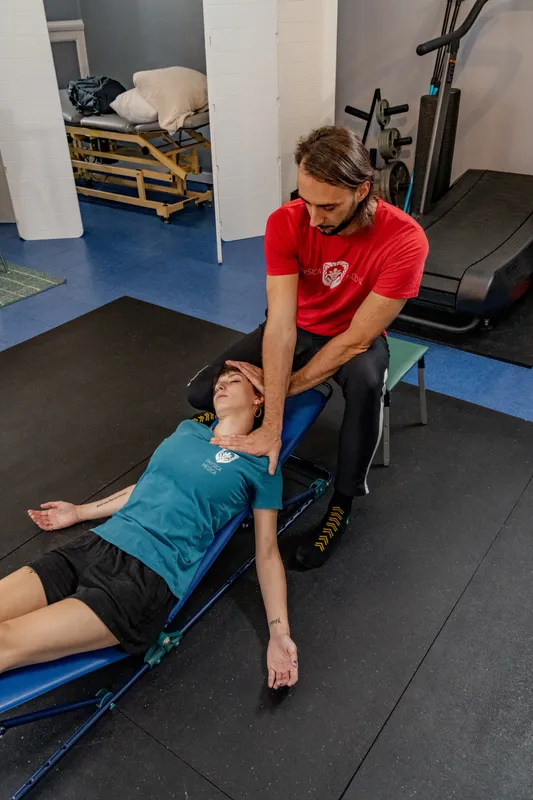
Neural tension release is a hands-on manual therapy technique. Dr. Birikov positions the limb or spine to place the nerve under controlled tension, then introduces small, precise movements that encourage the nerve to glide through the surrounding tissue. The goal is to restore normal neural mobility. Not to stretch muscles, not to adjust joints, but to address the nerve pathway itself.
This is for you if
- You want hands-on bodywork: fascia, joint, nerve, needle. Not a program of exercises.
- You have already tried PT, massage or chiropractic and are still in pain.
- Your problem is chronic, recurring, or has never been explained to your satisfaction.
- You would rather have one hour with the doctor than three appointments with three people.
- You are willing to pay out of pocket for undivided expert attention.
This is not for you if
- You are looking for an exercise-based rehab program supervised by an aide.
- You need a clinic that bills your insurance directly and books you three times a week.
- You have an acute traumatic injury that needs imaging or surgical evaluation first.
- You want a single visit that makes a decade-old pattern disappear.
Conditions Treated with Neural Tension Release
Neural tension is a contributing factor in a wider range of conditions than most patients realize. If you have been diagnosed with any of the following and have not found lasting relief, restricted nerve mobility may be part of what has been missed.
A shoulder that lives in the rib cage
A shoulder that will not lift past ninety degrees, treated at the shoulder for months. The ribs underneath it had stopped moving, so the scapula had nowhere to travel. Free the rib cage and the shoulder is not the problem anymore.
A hip held by a fifteen-year-old scar
Deep hip pain, clean imaging, no explanation. An old abdominal incision had bound the fascia above it, and every stride was pulling against that anchor. Mobilize the scar and the stride returns.
Neural Tension vs. Structural Nerve Compression: A Critical Distinction
This distinction matters because the treatment is different. Structural compression, such as a herniated disc pressing directly on a nerve root or a bone spur narrowing the spinal canal, may require imaging, specialist referral, or in some cases surgical evaluation. Dr. Birikov will tell you directly if your presentation suggests you need that pathway first.
What to Expect in a Neural Tension Release Session
Assessment first
Dr. Birikov will take a focused history: what your symptoms are, exactly where they occur, what movements or positions provoke or relieve them, and what you have already tried. Prior imaging is useful if you have it, but not required to be seen.
Hands-on nerve testing
Neural tension is assessed through specific orthopedic tests: straight leg raise, slump test, upper limb tension tests. These are not painful by design, but they are designed to reproduce your symptoms in a controlled way. Where and when your symptoms appear during these tests tells Dr. Birikov which nerve pathway is involved and where the restriction is.
Treatment, same visit
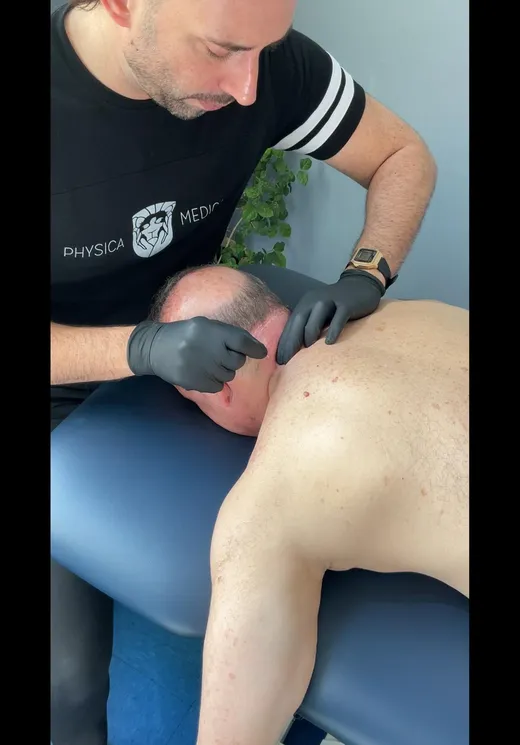
You are treated on the first visit. Neural mobilization is performed hands-on, with Dr. Birikov guiding the movement rather than giving you exercises to do on your own. Depending on what the assessment shows, this may be combined with fascial release, dry needling, or instrument-assisted soft tissue work on the structures surrounding the nerve.
What to expect afterward
Neural mobilization is generally well-tolerated. Some patients feel immediate relief of symptoms during or after the session. Others notice a temporary increase in sensitivity for 24 to 48 hours as the nervous system adjusts. This is normal and typically resolves. Dr. Birikov will tell you what to watch for before you leave.
Most patients with nerve-related symptoms see meaningful change within 4 to 6 sessions. Cases involving long-standing nerve irritation, post-surgical changes, or multiple contributing restrictions may take longer. You will receive an honest estimate at the end of your first visit, not a vague 'it depends.'
Before You Book
How is one-on-one physical therapy different from PT at a regular clinic?
What is the difference between neural tension and a pinched nerve? A pinched nerve involves physical compression of the nerve by an adjacent structure: a disc, bone, or inflamed tissue pressing directly on the nerve. Neural tension refers to restricted mobility; the nerve cannot glide freely through the surrounding tissue as you move. Both can produce similar symptoms. Neural tension does not show on imaging and is identified through clinical movement testing. Many patients with a 'pinched nerve' diagnosis have neural tension as the primary or contributing driver of their symptoms.
How many sessions will I need?
Can neural tension release help with sciatica or numbness and tingling? Yes. Sciatica, pain that radiates from the low back down the leg, is one of the most common presentations of neural tension. The sciatic nerve runs through multiple layers of tissue that can restrict its movement. Numbness and tingling in the arms or hands, often attributed to cervical disc problems or carpal tunnel, can also involve restricted nerve mobility along the pathway. If you have been treated for sciatica or nerve symptoms without lasting results, neural tension is worth investigating as a mechanism.
Do you take insurance for one-on-one physical therapy?
How many sessions does neural tension release typically require? Most patients with nerve-related symptoms see meaningful improvement within 4 to 6 sessions. Recent or acute nerve irritation tends to respond faster. Long-standing symptoms, post-surgical changes, or cases where multiple segments of the nerve pathway are restricted may require more. Dr. Birikov will give you a specific estimate after the first session, based on what the assessment shows, not a standard package.
Book Neural Tension Release Therapy in Baltimore
If you have been told you have a pinched nerve, sciatica, or nerve damage and you are still in pain after treatment, the mechanism may not have been correctly identified. Send what your symptoms are, what you have tried, and what has not been explained to your satisfaction. Physica Medica is located at 800 S Bond St, Baltimore, MD 21231. You can also reach the office at 443-228-8029.
Dr. Birikov reads every inquiry personally and responds directly. No referral is required.